Technology · 9 min read · March 6, 2026
Deepfake Nudes: What They Are, How to Find & Remove Them
Deepfake nudes use AI to put your face on explicit content. Learn how to detect them, your legal rights, and how to get deepfake porn removed fast.
Deepfake nudes are AI-generated explicit images or videos that place a real person’s face onto pornographic content without their knowledge or consent. Unlike traditional revenge porn, which requires actual intimate photos to exist, deepfake technology can target anyone with publicly available photos — a social media selfie is all the AI needs. This guide explains how deepfake nudes are created, how to find them, your legal options for removal, and how to protect yourself.
The scale of this problem is staggering. According to the Home Security Heroes 2023 deepfake report, the number of deepfake pornography videos online grew by 550% between 2019 and 2023. Of all deepfake videos on the internet, 98% are pornographic — and the overwhelming majority target women.
In this guide:
- Common Forms of Deepfake Nudes
- How Deepfake Nudes Are Created
- How Deepfake Nudes Harm Victims
- Legal Status of Deepfake Nudes
- What to Do If You’re a Victim
- How to Detect Deepfake Nudes
- How to Prevent Being Targeted
- How Privacy Leak Can Help
- FAQ
- Key Takeaways
Common Forms of Deepfake Nudes
Deepfake intimate content appears in several distinct forms, each created with different tools and distributed through different channels.
Face-swap videos. The original and most well-known form. AI maps a victim’s face onto a performer’s body in an existing pornographic video. Modern face-swap tools produce convincing results from just a handful of source photos, and the output is often difficult to distinguish from real footage without close inspection.
AI-generated nude images (“nudify” apps). These tools take a clothed photo and use AI to generate a realistic nude version. Several apps and websites offering this functionality have emerged in recent years, some marketed openly despite the obvious potential for abuse. The output is a single image rather than a video, making it easy to share across messaging apps and forums.
Synthetic full-body generation. More advanced AI models generate entirely new explicit images of a person — not by modifying an existing photo, but by creating one from scratch using the victim’s face as a reference. These are harder to detect because there’s no original photo to compare against.
Voice-cloned deepfakes. Emerging technology combines deepfake video with cloned voice audio. Using a few minutes of recorded speech, AI can generate audio that sounds like the victim, adding another layer of false authenticity to the content.
Deepfake targeting of minors. The most disturbing application. Schools and communities have reported incidents where students use deepfake tools to create explicit images of classmates. This constitutes child sexual abuse material (CSAM) regardless of how it was created and carries severe criminal penalties.
How Deepfake Nudes Are Created
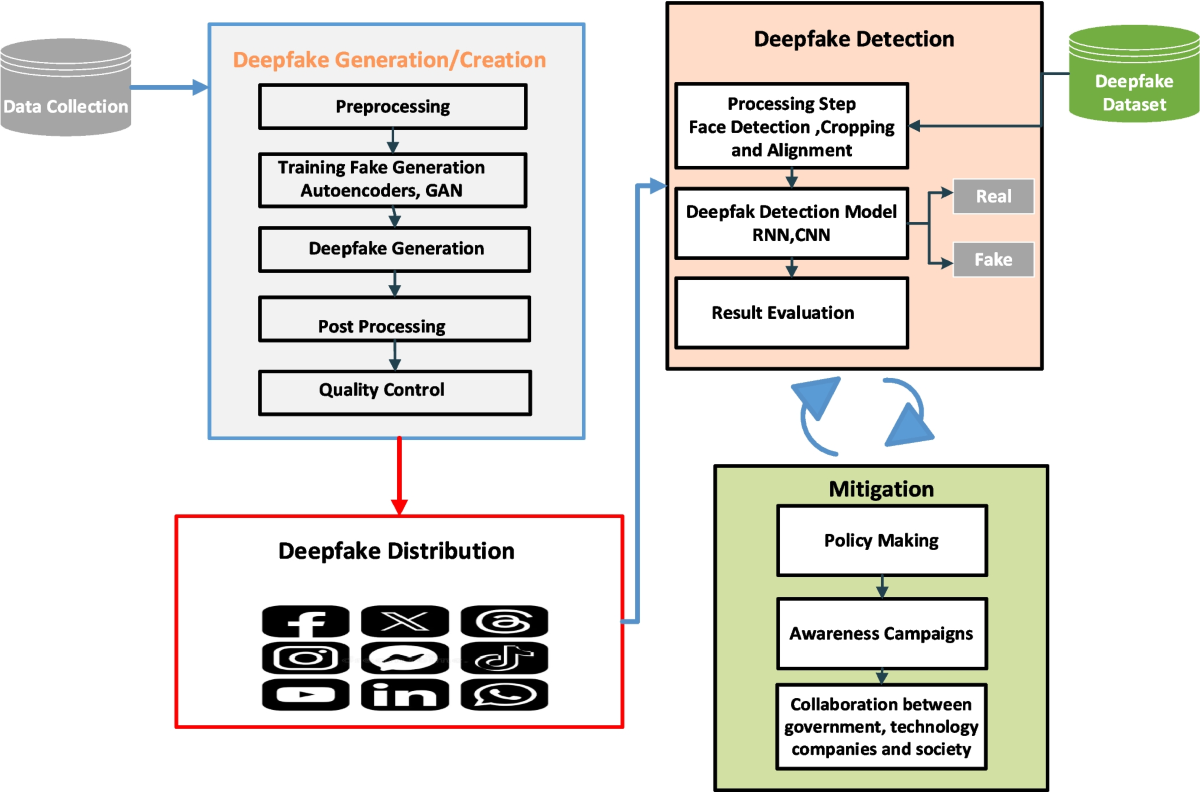
Understanding the creation process helps explain why anyone with public photos is potentially at risk.
Modern deepfake tools require surprisingly little input. A face-swap algorithm typically needs 10–25 clear photos of the target person’s face to produce convincing results. For “nudify” apps, a single clothed photo is often enough. These source images usually come from social media profiles, which are publicly accessible.
The tools themselves have become dramatically easier to use. What once required specialized machine learning knowledge and expensive hardware can now be done through browser-based apps in minutes. Some services charge as little as a few dollars per image. This accessibility has transformed deepfakes from a niche technical curiosity into a widespread abuse tool.
The distribution channels are equally concerning. Deepfake nudes circulate on dedicated forums, anonymous image boards, Telegram channels, and adult websites. Some are shared within private groups where members trade deepfakes of specific individuals. Others are uploaded to public adult platforms where they may be viewed thousands of times before the victim even learns they exist.
How Deepfake Nudes Harm Victims
The psychological impact of deepfake nudes is comparable to — and in some ways worse than — traditional revenge porn.
A person doesn’t need to have taken any intimate photos to become a victim. This means the violation feels random and uncontrollable. Victims describe a profound sense of helplessness: their face has been weaponized using public photos they shared innocently, and they have no way to prevent the AI from being run again with new images.
The Cyber Civil Rights Initiative reports that victims of non-consensual intimate imagery — including deepfakes — frequently experience severe anxiety, depression, and social withdrawal. The effects can be career-ending: victims have lost jobs, been denied promotions, and been forced to abandon online presences that were essential to their livelihoods.
For public figures, content creators, and anyone with a significant online presence, deepfakes represent a particular threat. The more photos of you available online, the more material the AI has to work with — and the more convincing the result. Some victims face repeated targeting, with new deepfakes created even after previous ones are removed.
There’s also a unique reputational harm. Even when a deepfake is identified as fake, the association between the victim’s face and explicit content can persist in viewers’ minds. The damage to reputation isn’t fully undone by debunking.
Legal Status of Deepfake Nudes
The law is catching up to deepfake technology, though enforcement remains uneven.
United States
The Take It Down Act — signed into law in May 2025 — is the most significant federal response. It explicitly covers AI-generated intimate content, requiring platforms to remove deepfake nudes promptly after receiving a valid removal request. This law treats deepfakes the same as real non-consensual intimate images.
At the state level, a growing number of states have enacted laws specifically targeting deepfake pornography. According to the National Conference of State Legislatures, multiple states passed AI-focused legislation in 2024 addressing deepfakes, with penalties ranging from civil liability to felony criminal charges.
The DMCA may also apply if the source photo used for the deepfake was one you took (meaning you hold the copyright to the original image).
European Union
The EU’s AI Act, which began phased implementation in 2024, includes transparency requirements for AI-generated content. The GDPR provides data erasure rights that apply to deepfake content using a person’s likeness. Several EU member states have enacted or are developing specific criminal provisions for deepfake intimate imagery.
Other jurisdictions
The UK’s Online Safety Act covers deepfake intimate imagery. South Korea has been particularly aggressive, criminalizing both the creation and distribution of deepfake pornography with penalties of up to five years imprisonment. Australia and Canada have also updated their laws to address AI-generated intimate content.
What to Do If You’re a Victim
If you discover deepfake nudes of yourself, follow these steps.
1. Document everything before requesting removal
Screenshot every instance: the content itself, the URL, the website name, any usernames associated with the upload, the date, and any visible metadata. Save this in a secure folder. Platforms sometimes take content down quickly after reports, and without documentation, you’ll lose evidence you may need for legal action.
2. Report to the hosting platform
Every major platform prohibits deepfake intimate content in its terms of service. File a report through the platform’s content removal or abuse reporting form. Specify that the content is AI-generated and non-consensual. Under the Take It Down Act, U.S.-accessible platforms are required to act on valid removal requests.
3. Use StopNCII to block re-uploads
StopNCII.org creates a digital hash of your images that participating platforms use to automatically detect and block re-uploads. While this was originally designed for real photos, it can also be used with deepfake images to prevent the same generated content from being re-posted.
4. File for legal removal
Two primary paths are available in the U.S.:
Take It Down Act request — the strongest option for deepfake content, as it doesn’t require copyright ownership. It covers any non-consensual intimate image, real or AI-generated.
DMCA takedown notice — applicable if the deepfake was created using a source photo you own the copyright to. Be aware that DMCA filings require your real name and contact information.
5. Scan for copies across adult platforms
Deepfake content spreads quickly across multiple sites. Use facial recognition tools to search for your face across adult content databases. This is the only way to discover copies on obscure platforms you’d never think to check manually. Early discovery limits how far the content can spread.
6. Report to law enforcement
If deepfake pornography of you is criminal in your jurisdiction — and it increasingly is — file a police report. For cases involving minors, report immediately to the National Center for Missing & Exploited Children (NCMEC) and the FBI’s IC3.
How to Detect Deepfake Nudes
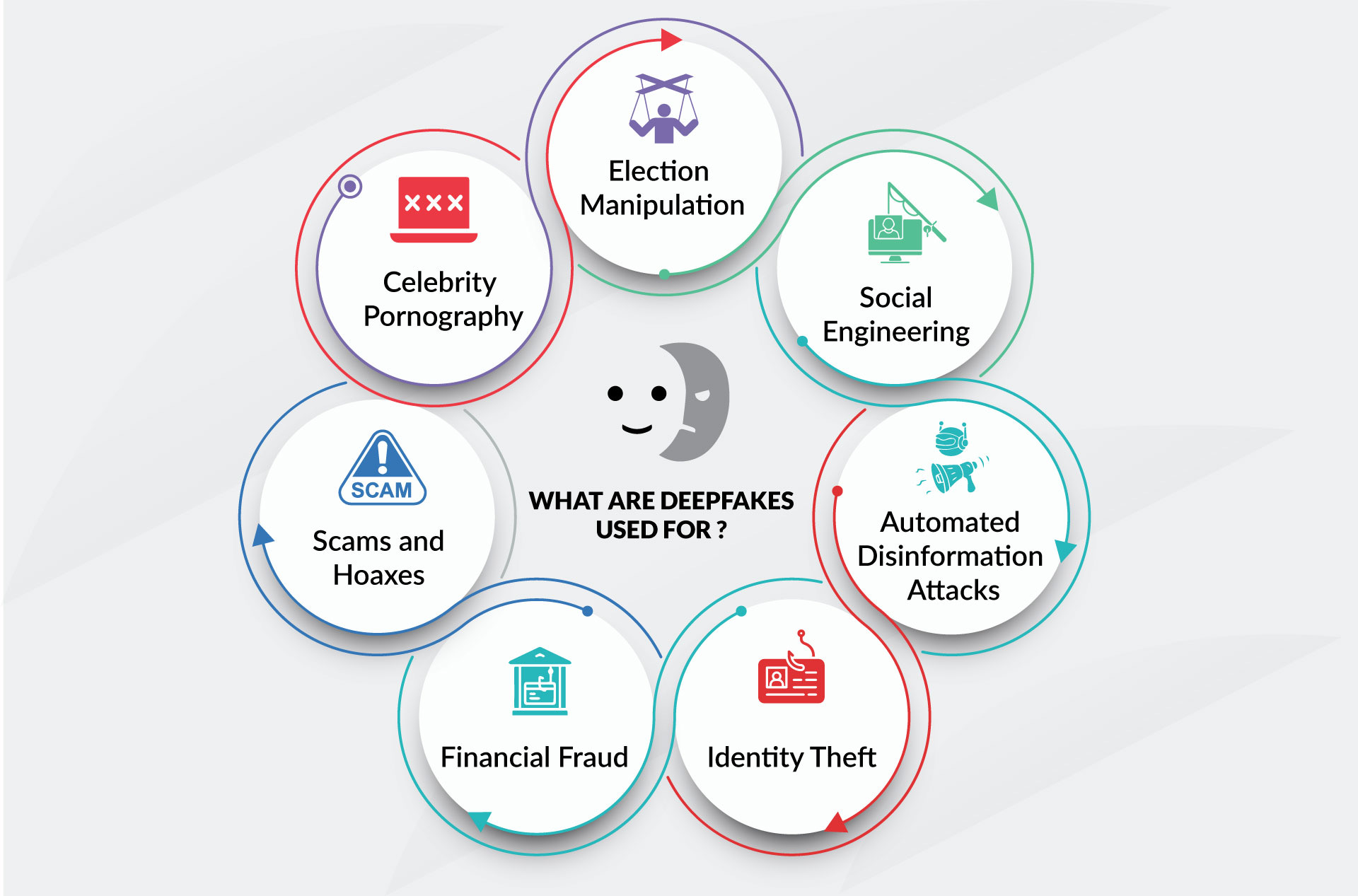
Identifying whether an image is AI-generated is important for building your case and for platforms processing your removal request.
Visual tells in deepfake images. Even sophisticated deepfakes often contain subtle artifacts. Look for asymmetric earrings or accessories, inconsistent hair at the edges of the face, warped or impossibly smooth backgrounds, mismatched lighting between the face and body, and skin that appears unnaturally flawless without pores or texture variation. Hands and teeth are also common failure points — fingers may be the wrong length or number, and teeth may appear blurred or misaligned.
Metadata analysis. AI-generated images sometimes lack the EXIF metadata (camera model, GPS, date) that real photos contain. Conversely, some generators insert synthetic metadata. Check the file properties: the absence of typical camera information is a potential indicator.
AI detection tools. Several tools are specifically designed to identify AI-generated content. These analyze patterns in pixel-level data, compression artifacts, and statistical anomalies invisible to the human eye. Privacy Leak’s AI detection mode flags deepfake content during facial recognition scans, which is useful for both identifying synthetic images and strengthening removal requests.
Reverse image search. A standard reverse image search may reveal the original pornographic content that the victim’s face was swapped onto. If you find the same body in a different video or image with a different face, that’s confirmation of a face swap.
How to Prevent Being Targeted
No prevention method is foolproof — deepfakes can be created from any clear photo of your face. But these steps reduce your exposure.
Limit high-resolution face photos on public profiles. The fewer clear, varied-angle face photos available publicly, the less material a deepfake tool has to work with. This doesn’t mean deleting your online presence, but consider tightening privacy settings on social media so your photos are visible only to connections.
Use watermarks on professional or creator photos. Visible watermarks don’t prevent deepfakes entirely, but they make the output less convincing and may deter casual abuse.
Monitor regularly. Proactive scanning catches deepfakes early, before they spread widely. Set up Google Alerts for your name, and periodically run facial recognition scans across adult content platforms.
Talk to young people about the risks. Deepfake abuse among students is a growing problem. Teens and young adults should understand that creating deepfake nudes of anyone — including classmates — is a serious crime, and that being targeted is not the victim’s fault.
How Privacy Leak Can Help
Privacy Leak is built for exactly this type of threat — finding and removing intimate content you didn’t consent to.
AI deepfake detection. Privacy Leak’s AI detection mode specifically identifies synthetic and AI-generated content across indexed adult platforms. This means you can find deepfake nudes of yourself even when the content never existed as a real photo — something traditional reverse image search tools fundamentally cannot do.
Facial recognition across adult sites. Privacy Leak scans your face against hundreds of millions of indexed images across adult websites, forums, and image hosting platforms. This catches deepfake nudes posted on obscure sites that victims would never find manually.
Legal Takedown Service. Privacy Leak’s legal team files removal notices through both the DMCA and Take It Down Act channels. They act as your legal proxy, so your identity is never exposed to the platform or the person who created the deepfake. Most content is removed within 24–72 hours. Non-compliant platforms are escalated through hosting providers, registrars, and CDN services.
Ongoing monitoring. Deepfake creators often produce multiple versions or re-upload content after removal. Real-time monitoring (available on Premium and Enterprise plans) alerts you immediately when new matches appear, so you can act before the content spreads again.
→ Try a free scan at privacyleak.ai
FAQ
What are deepfake nudes?
Deepfake nudes are AI-generated explicit images or videos that place a real person’s face onto pornographic content without their consent. They are created using publicly available photos — a social media selfie is often enough — and can be produced in minutes using widely accessible tools.
Are deepfake nudes illegal?
Yes, in a growing number of jurisdictions. In the U.S., the Take It Down Act explicitly covers AI-generated intimate content and requires platforms to remove it. Multiple states have enacted specific deepfake pornography laws with criminal penalties. The EU, UK, South Korea, and other countries also criminalize deepfake intimate content.
How can I tell if a photo is a deepfake?
Look for visual artifacts: asymmetric accessories, inconsistent hair edges, warped backgrounds, unnaturally smooth skin, and distorted hands or teeth. Metadata analysis can also help — AI images often lack standard camera EXIF data. For conclusive detection, AI-powered tools analyze pixel-level patterns invisible to the human eye. Privacy Leak’s AI detection mode flags synthetic content during scans.
Can deepfake nudes be removed from the internet?
Yes. You can report to the hosting platform, file under the Take It Down Act (which explicitly covers AI content), or use a legal takedown service. However, deepfakes can be regenerated, so ongoing monitoring is important. Early detection limits spread and simplifies removal.
Do I need to have taken nude photos to be a victim of deepfake porn?
No. That’s what makes deepfakes especially dangerous. Anyone with publicly visible face photos — on social media, news articles, or professional profiles — can be targeted. The AI generates explicit content that never existed, using only your face as input.
What should I do if I find a deepfake of myself?
Document everything immediately: screenshots, URLs, dates. Report to the hosting platform and file a Take It Down Act or DMCA request. Use facial recognition tools to scan for additional copies you may not have found. Consider reporting to law enforcement, especially if the content is criminal in your jurisdiction.
How does Privacy Leak detect deepfakes specifically?
Privacy Leak offers an AI detection mode that identifies synthetic and AI-generated content during facial recognition scans. This mode analyzes patterns that distinguish AI-generated images from real photographs, flagging deepfake nudes alongside their source URLs. This is in addition to the standard face, voice, and tattoo search modes.
Can I prevent deepfake nudes from being created of me?
Complete prevention isn’t possible if clear photos of your face exist anywhere online. However, you can reduce risk by limiting high-resolution photos on public profiles, tightening social media privacy settings, and monitoring proactively. If deepfakes are created, early detection through facial recognition scanning limits how far they spread.
Key Takeaways
- Deepfake nudes are AI-generated explicit images using a real person’s face — no actual intimate photos need to exist for you to be targeted.
- The problem is growing rapidly: deepfake pornography online increased 550% between 2019 and 2023, with 98% of deepfakes being pornographic.
- The Take It Down Act (signed May 2025) explicitly covers AI-generated intimate content and requires platforms to remove it promptly.
- If you’re a victim: document everything, report to the platform, file for legal removal, and scan for additional copies using facial recognition.
- AI detection tools can identify deepfakes by analyzing pixel-level patterns invisible to the human eye — useful for both finding content and strengthening removal requests.
- Ongoing monitoring is especially important for deepfake victims, since content can be regenerated even after removal.
Being targeted by deepfake technology is not your fault. If AI-generated intimate content of you exists online, you have legal rights and practical tools to find it and take it down.
→ Start your free scan at privacyleak.ai
Related Articles
- Leaked Intimate Photos: How to Find Them and Get Them Removed — pillar page covering the full discovery-to-removal process
- What Is Revenge Porn? Definition, Laws & How to Remove It — glossary guide to non-consensual intimate image sharing